Recognizing PRA: Clinical Signs, Examination, and Diagnosis
How veterinary ophthalmologists diagnose Progressive Retinal Atrophy, what owners should watch for, and the examination techniques that reveal retinal degeneration.
The family described their Cocker Spaniel's behavior change as subtle at first. Bailey had always bounded down the stairs with enthusiasm, but now she paused at the top, seeming to measure each step before committing. In the evening, she occasionally startled when family members approached from the side. At the dog park, she tracked thrown balls perfectly in bright sunlight but lost them entirely as dusk approached.
These observations, pieced together over several months, painted a picture I recognized immediately. Before I even began my examination, I suspected Progressive Retinal Atrophy. The clinical signs follow patterns that, once understood, become unmistakable. Learning to recognize these patterns helps owners seek evaluation earlier and helps breeders understand what to watch for in their dogs.
The First Signs: What Owners Notice
PRA rarely announces itself dramatically. Instead, it whispers through subtle behavioral changes that owners may initially dismiss or attribute to other causes. The progressive nature of the disease means early signs often go unrecognized until vision loss becomes more apparent.
- Hesitation or reluctance to navigate in dim lighting
- Bumping into objects, especially in unfamiliar environments
- Difficulty finding toys or treats in low light
- Startling when approached from the side or from behind
- Reluctance to go outside at night
- Changes in confidence navigating stairs or obstacles
- Increased clinginess or anxiety in new places
The timing of these signs depends on the specific PRA variant involved. Early-onset forms like rcd1 and rcd3 may show signs in puppies under six months old. Late-onset variants like PRCD typically manifest between ages three and six. Knowing your breed's characteristic PRA type helps calibrate expectations.
The Ophthalmologic Examination
When owners bring a dog with suspected vision problems, my examination follows a systematic approach designed to distinguish PRA from other causes of visual impairment. Each component contributes to building a complete diagnostic picture.
Behavioral Assessment
Before touching the patient, I observe how the dog navigates the examination room. Does she track my movements visually? Does she bump into furniture or hesitate at doorways? I note responses to visual stimuli like cotton balls dropped silently in the peripheral visual field. These observations provide functional information that complements technical examination.
External Examination
I examine the external eye structures for abnormalities that might cause vision loss unrelated to PRA. Corneal disease, lens opacity (cataracts), and other conditions can produce similar symptoms. PRA specifically affects the retina, so anterior segment structures typically appear normal in affected dogs.
Pupillary Light Reflexes
The pupils should constrict when light is directed into the eye. In advanced PRA, pupillary responses become sluggish or incomplete as photoreceptor function diminishes. However, early PRA may show normal pupillary reflexes, so this test alone cannot rule out the condition.
Fundoscopic Examination
Direct and indirect ophthalmoscopy allow visualization of the retina, optic nerve, and blood vessels at the back of the eye. This examination reveals the hallmark changes of PRA:
| Finding | Description | Stage Indication |
|---|---|---|
| Tapetal Hyperreflectivity | Increased brightness of the reflective layer behind the retina | Early to moderate |
| Vascular Attenuation | Narrowing of retinal blood vessels | Moderate to advanced |
| Optic Nerve Pallor | Pale, washed-out appearance of the optic disc | Advanced |
| Retinal Thinning | Visible atrophy of retinal layers | Advanced |
Tapetal hyperreflectivity occurs because the degenerating retina becomes thinner, allowing more light to reach and reflect from the tapetum lucidum. This creates an abnormally bright eyeshine that experienced examiners recognize immediately. The change often appears first in the peripheral retina and progresses centrally.
Electroretinography: The Gold Standard
While fundoscopic changes confirm moderate to advanced PRA, electroretinography (ERG) can detect photoreceptor dysfunction before visible changes appear. This technique measures the electrical response of the retina to light stimulation, providing objective quantification of retinal function.
Full-field ERG requires specialized equipment and typically brief anesthesia for accurate recording. Scotopic (dark-adapted) ERG assesses rod function, while photopic (light-adapted) ERG evaluates cones. PRA typically shows reduced scotopic responses early, with photopic decline following as cones degenerate secondarily.
For breeding programs, ERG allows identification of affected dogs before clinical signs appear, enabling earlier breeding decisions. Some breed clubs recommend ERG screening for breeds with known PRA risk, particularly those with early-onset variants.
Genetic Testing: Confirming the Diagnosis
Clinical examination and ERG can diagnose PRA, but DNA testing identifies the specific mutation involved. This distinction matters for several reasons:
- Prognosis: Different mutations progress at different rates. Knowing the specific variant helps predict the timeline of vision loss.
- Family implications: DNA confirmation identifies parents as obligate carriers and informs testing priorities for siblings and offspring.
- Research eligibility: Gene therapy trials target specific mutations. Affected dogs may qualify for experimental treatments based on their genetic diagnosis.
For clinically affected dogs, I recommend genetic testing even when the diagnosis seems clear from examination. The information benefits the broader breed community and may become relevant as treatments advance.
Differential Diagnosis
Not every dog with night blindness or retinal changes has PRA. Other conditions can mimic its appearance:
- Sudden Acquired Retinal Degeneration Syndrome (SARDS): Causes acute blindness with similar retinal changes but different history and ERG pattern.
- Retinal detachment: Can cause visual impairment and altered fundus appearance but shows distinct ophthalmoscopic features.
- Glaucoma: Elevated intraocular pressure damages the optic nerve and can cause blindness, but examination reveals characteristic changes different from PRA.
- Cataracts: Lens opacity impairs vision but does not initially affect the retina. However, cataracts may develop secondary to PRA in some cases.
Thorough examination, combined with history and appropriate testing, distinguishes PRA from these alternatives. The distinction matters because some conditions are treatable while PRA currently is not.
Screening Programs
Many breed clubs participate in eye certification programs that provide systematic screening for inherited eye diseases including PRA. In the United States, the OFA (Orthopedic Foundation for Animals) maintains a database of eye examination results. Previously, CERF (Canine Eye Registration Foundation) served this role.
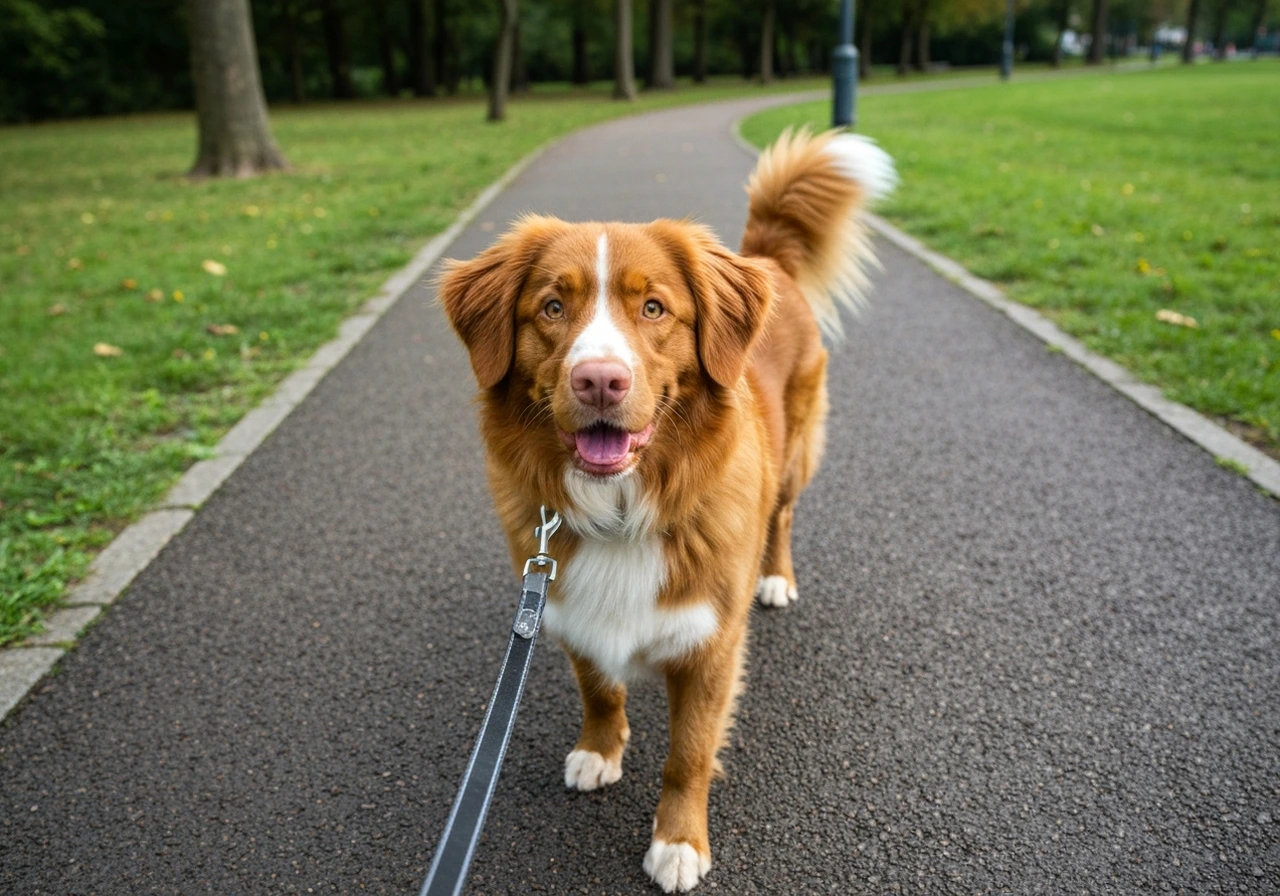
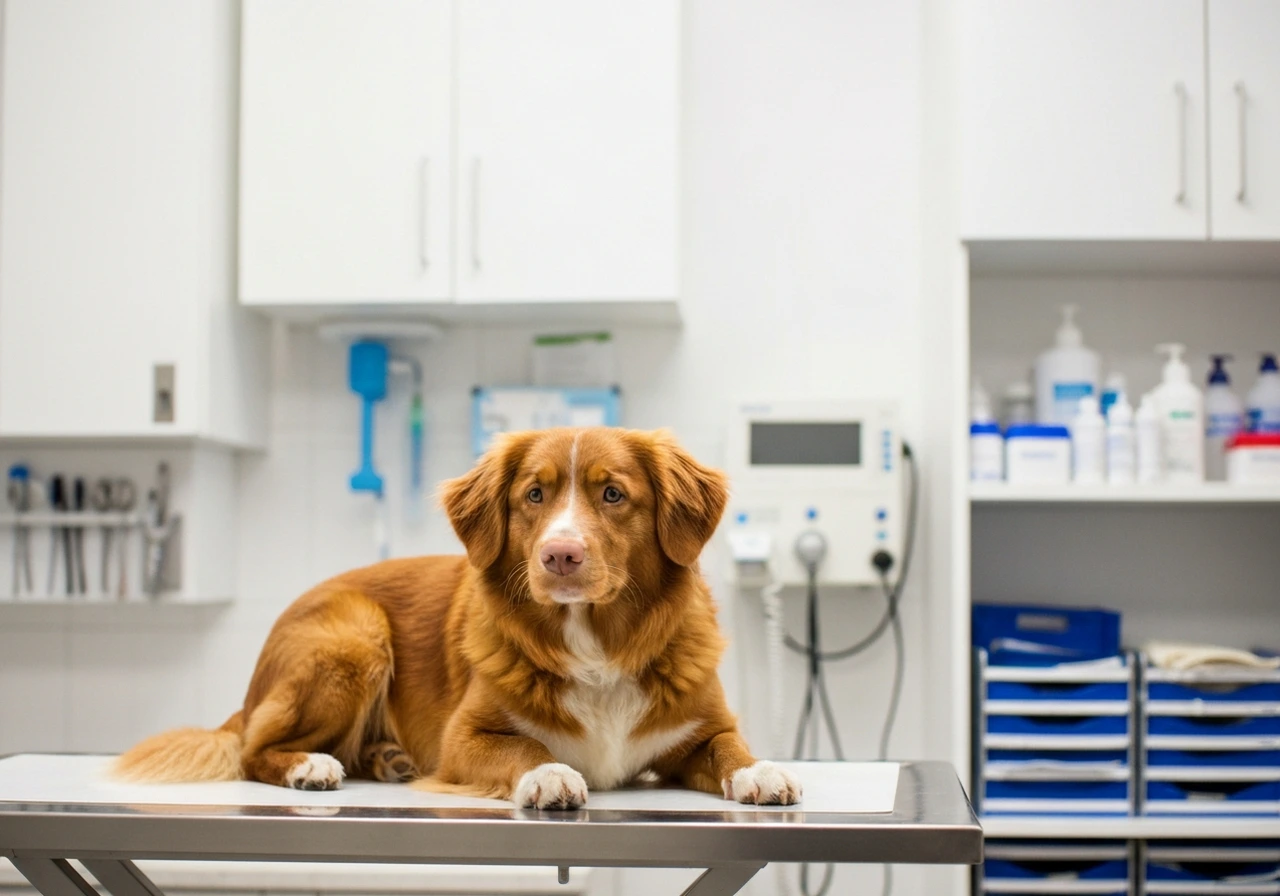
These programs involve annual examination by a board-certified veterinary ophthalmologist who evaluates for PRA and other conditions. Dogs passing examination receive certification valid for one year. Because PRA can develop at any age depending on the variant, annual recertification provides ongoing monitoring.
Clinical screening complements but does not replace genetic testing. A dog may test genetically affected yet show no clinical signs if examined before disease onset. Conversely, clinical screening catches PRA forms without available DNA tests. Both approaches contribute to comprehensive prevention.
What Happens After Diagnosis
A PRA diagnosis, whether clinical or genetic, initiates several considerations. For the affected dog, the focus shifts to quality of life management. Most dogs adapt remarkably well to vision loss, particularly when it occurs gradually. Maintaining consistent home environments, using verbal cues, and providing extra support during transitions helps dogs navigate blindness with confidence.
For breeding programs, diagnosis requires honest communication with puppy buyers and transparent reporting to breed health databases. Both parents of an affected dog are obligate carriers. Siblings have a two-thirds probability of carrier status among those testing clear. This information enables appropriate testing and breeding decisions throughout the pedigree.
The carrier breeding approach allows retention of valuable genetic lines while preventing affected offspring. Carriers bred to clear dogs produce zero affected puppies. This strategy preserves genetic diversity while systematically reducing mutation frequency over generations.
The Importance of Early Recognition
Bailey, the Cocker Spaniel from my opening story, was diagnosed with prcd-PRA at age four. Her owner's careful observations of subtle behavioral changes led to early evaluation. While the diagnosis could not change Bailey's prognosis, it informed management decisions that optimized her quality of life and prevented breeding without appropriate testing.
Early recognition matters most for breeding decisions. Dogs diagnosed before reproduction can be managed appropriately, with testing of potential mates ensuring no affected offspring. Dogs who reproduce before diagnosis may already have produced carrier or affected offspring, expanding the challenge across additional generations.
Every veterinary ophthalmologist hopes for the day when PRA becomes preventable through universal genetic testing. Until then, clinical recognition remains essential. Learning to recognize the signs, pursuing timely evaluation, and acting on diagnostic information moves us toward that prevention goal one dog at a time. The Herding Gene resource provides additional information on eye conditions and health screening for herding and working breeds.
Dr. Amanda Foster, Veterinary Ophthalmologist